Pelvic Floor Dysfunction in Men: Symptoms, Causes and Treatment
7 min read
Pelvic floor dysfunction is not one single muscle problem. The pelvic floor has to perform several apparently opposite tasks: it must create enough tension to help maintain continence, yet relax appropriately during urination and bowel movements. It also participates in sexual function, breathing and pressure management. Dysfunction can occur when those muscles are weak, excessively active, painful or poorly coordinated. Cleveland Clinic defines pelvic floor dysfunction particularly around difficulty relaxing and coordinating the pelvic floor during bowel and bladder functions, while pelvic-health rehabilitation more broadly addresses weak, tight and poorly functioning pelvic-floor muscles. That broad functional perspective is particularly useful in men because the same symptom can have very different underlying causes.
Quick answer
- Pelvic floor dysfunction (PFD) means the pelvic-floor muscles are not functioning or coordinating normally.
- In men, problems may involve excessive tension, difficulty relaxing, weakness, poor coordination or pelvic-floor pain.
- Symptoms can affect urination, bowel movements, pelvic comfort and sexual function.
- Several different pelvic-floor patterns — and non-pelvic medical conditions — can produce similar symptoms, so treatment should be based on the underlying problem rather than automatically prescribing Kegels.
Pelvic floor dysfunction is an umbrella term, not a diagnosis of weakness. The right treatment depends on whether your muscles are too weak, too tight or simply badly coordinated — which is why assessment comes before exercise. Free Kegel Trainer for Men.
What Is Pelvic Floor Dysfunction?
PFD is an umbrella concept covering abnormal pelvic-floor function. Depending on the patient, it may involve problems with muscle tone (the muscles may be excessively tense or insufficiently active), strength (they may be unable to generate adequate force), endurance (they may contract correctly but fatigue too quickly), relaxation (they may fail to release during urination or bowel movements) or coordination (they may contract at the wrong time or fail to work effectively with other muscles).
For the anatomy behind these functions, see our guide to the male pelvic floor.
Symptoms of Pelvic Floor Dysfunction in Men
Symptoms depend on the type of dysfunction.
Urinary symptoms
- Urinary leakage
- Urinary urgency
- Frequent urination
- Difficulty starting the stream
- Interrupted flow
- Incomplete-emptying sensation
These symptoms can also come from bladder, prostate, urethral or neurological conditions.
Bowel symptoms can include constipation, excessive straining, incomplete evacuation, difficulty coordinating bowel movements, and leakage of stool or gas.
Pelvic pain may involve the perineum, penis, testicles, rectum, pelvis or lower abdomen. Pelvic-floor myalgia is recognized as one contributor to some chronic male pelvic-pain presentations.
Sexual symptoms may include painful ejaculation, erection-related pain, erectile difficulties or changes in ejaculation and orgasm. However, sexual dysfunction is multifactorial, and pelvic-floor dysfunction should not automatically be assumed to be the cause.
What Causes Pelvic Floor Dysfunction?
There may be several contributors at once.
Examples include:
- Pelvic or prostate surgery
- Chronic pelvic pain
- Musculoskeletal dysfunction
- Habitual muscle guarding
- Chronic constipation and straining
- Chronic coughing
- Injury or trauma
- Neurological disorders
- Learned poor coordination
- Excessive pelvic-floor tension
Sometimes another urinary, bowel or pain disorder develops first and pelvic-floor dysfunction appears secondarily.
Weak vs Tight Pelvic Floor Dysfunction
This distinction changes treatment.
In weakness-dominant dysfunction, the pelvic floor is unable to generate sufficient force or endurance. Potential treatment may include pelvic-floor strengthening — see our article on the weak pelvic floor.
In tightness-dominant dysfunction, the pelvic floor has excessive resting tone or difficulty relaxing. Potential treatment may emphasize down-training, relaxation, coordination and myofascial treatment — see our article on the tight pelvic floor.
| Weakness-dominant dysfunction | Tightness-dominant dysfunction |
|---|---|
| Cannot generate enough force or endurance | Excessive resting tone or difficulty relaxing |
| Leakage with coughing, lifting or movement | Pelvic pain or a clenched feeling |
| May follow prostate surgery | Difficulty starting urination or bowel movements |
| Strengthening may help | Relaxation and down-training come first |
Pelvic Floor Dysfunction vs Prostatitis
The symptoms can overlap significantly. Pain, urinary changes and painful ejaculation are often described by men with chronic prostatitis/chronic pelvic pain syndrome.
Modern urology guidelines recognize that musculoskeletal and pelvic-floor abnormalities may be relevant in some of these patients. This does not mean “prostatitis is really just a tight pelvic floor” — infection, inflammatory conditions, bladder problems, neurological mechanisms and other contributors may need consideration.

How Is Pelvic Floor Dysfunction Diagnosed?
Evaluation typically begins with symptoms and medical history. Depending on the problem, clinicians may assess pelvic-floor strength, resting muscle tension, ability to relax, tenderness, coordination, bowel function, urinary function, and surrounding muscles and joints.
EAU guidance states that male pelvic-floor function can be evaluated by appropriately trained clinicians and pelvic physiotherapists, including rectal examination when appropriate.
Other investigations may sometimes include:
- Urine testing
- Bladder studies
- Urodynamics
- Imaging
- Bowel-function testing
- Neurological assessment
The appropriate test depends on the symptoms.
How Is Pelvic Floor Dysfunction Treated?
Pelvic-floor physical therapy is individualized based on what the examination finds. It may include strength training, relaxation/down-training, coordination training, biofeedback, manual therapy, mobility exercises, behavioral changes and breathing techniques. Mayo Clinic and Cleveland Clinic pelvic-health programs both describe individualized rehabilitation aimed at restoring strength, flexibility, coordination and function.
Kegel exercises can be useful if strength or continence control needs improvement — see our plain-English guide to Kegel exercises for men. They are not a universal PFD treatment.
If excessive tone is present, relaxation may be prioritized. Options can include diaphragmatic breathing, pelvic-floor awareness, gentle active relaxation, manual physical therapy and biofeedback — our reverse Kegel guide covers one common relaxation technique.
Biofeedback can help people understand whether pelvic-floor muscles are contracting or relaxing correctly. It is used in some pelvic rehabilitation programs and is included in guideline-supported management for selected forms of pelvic-floor dysfunction.
Pelvic-floor therapy may also need to occur alongside treatment for constipation, urinary disease, prostate conditions, chronic pelvic pain, musculoskeletal problems or neurological conditions.
Can You Treat Pelvic Floor Dysfunction Yourself?
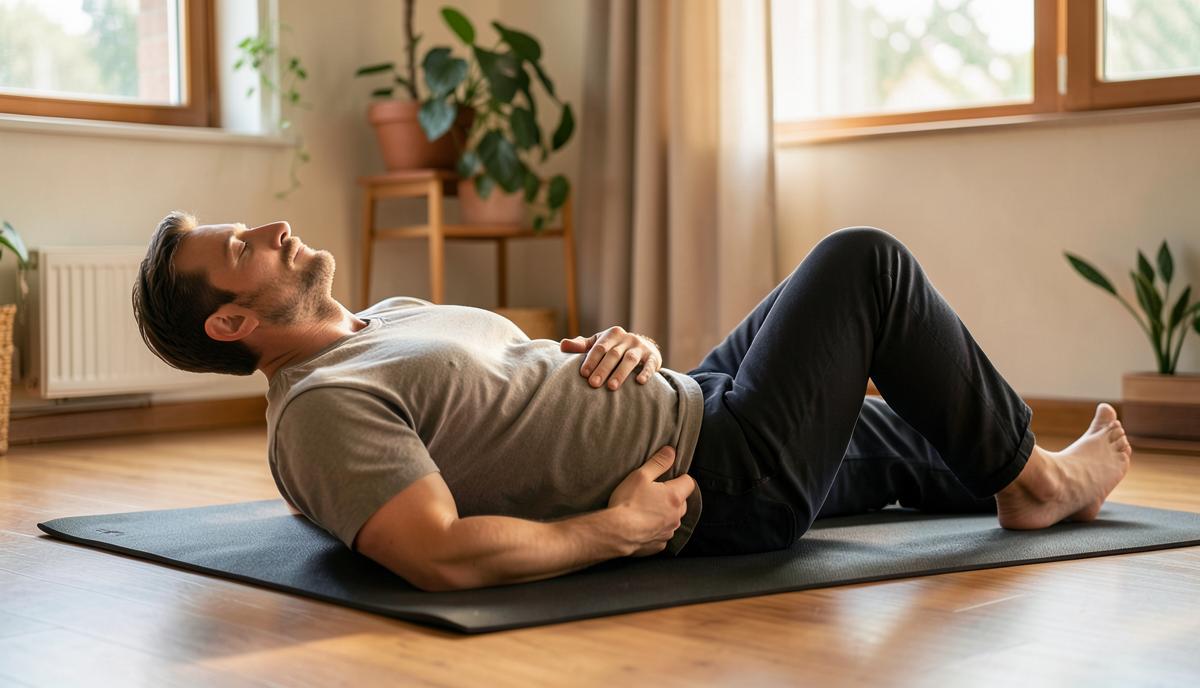
Simple awareness exercises may be reasonable, but persistent pelvic-floor dysfunction should not be reduced to a generic home routine. The fundamental problem may be too little contraction, too much contraction, poor relaxation, poor coordination — or something outside the pelvic floor entirely. Those require different solutions.
If weakness turns out to be your pattern, a simple way to train both strength and relaxation is our Free Kegel Trainer for Men, which guides you through structured squeeze-and-release sessions.
When to See a Doctor or Pelvic-Floor Therapist
Seek assessment if symptoms:
- Persist or worsen
- Cause significant pain
- Interfere with urination
- Interfere with bowel movements
- Affect sexual function
- Occur after prostate surgery
- Do not improve despite appropriate conservative measures
Seek urgent care for inability to urinate, significant bleeding, fever with severe pelvic or urinary symptoms, or sudden neurological loss of bladder or bowel control.
Frequently asked questions
Is pelvic floor dysfunction common in men?
It occurs in men and is increasingly recognized in urology and pelvic rehabilitation, particularly in relation to continence and chronic pelvic pain.
Is pelvic floor dysfunction always weakness?
No. It can involve weakness, excessive tension, impaired relaxation or poor coordination.
Are Kegels good for pelvic floor dysfunction?
Sometimes. They are appropriate for certain weakness-related problems but may be the wrong emphasis when excessive tone is present.
Can pelvic floor dysfunction cause erection problems?
It may contribute in some men, but erectile dysfunction has many possible causes.
What kind of doctor treats pelvic floor dysfunction in men?
Depending on symptoms, care may involve a primary-care clinician, urologist, gastroenterologist, colorectal specialist, pain specialist or pelvic-floor physical therapist.
Train the muscle behind control
The Free Kegel Trainer guides you through squeeze and release intervals, day by day.
Start Day 1Sources
More Sexual Health articles
Medical disclaimer: This article is educational and not medical advice. Speak to a doctor or pelvic floor physiotherapist about persistent pelvic pain or urinary symptoms.