Reverse Kegel for Men: What It Is and How to Do It
7 min read
Traditional Kegels train contraction. Reverse Kegels train the other side of pelvic-floor control: letting go. The term is widely used online, but it is not a precisely standardized medical exercise — the useful concept behind it is simply that the pelvic floor must be able to both contract and relax, and that relaxation is a skill many men have never practised.
Quick answer: what is a reverse Kegel?
- A reverse Kegel is deliberately relaxing and allowing the pelvic floor to lengthen or descend, instead of tightening and lifting it as in a traditional Kegel.
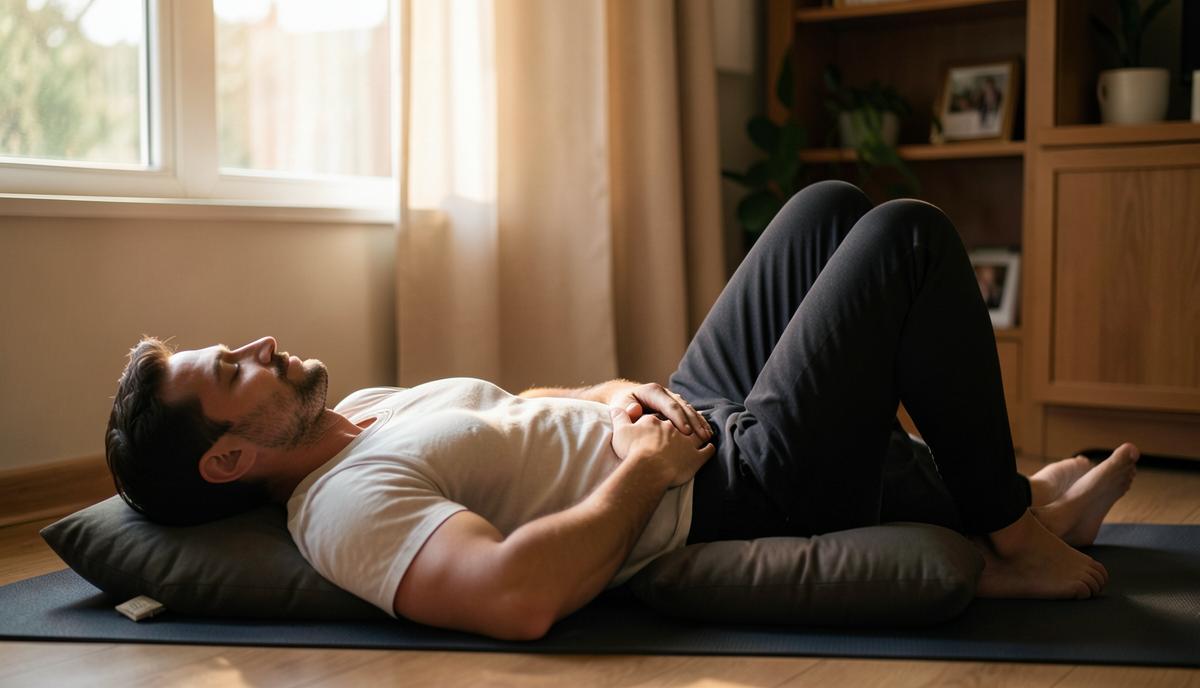
- To practise: breathe slowly into your lower ribs and abdomen, let the belly expand on the inhale, and let the muscles around the anus and perineum soften rather than squeeze.
- Think release, not push — forceful bearing down is straining, not a reverse Kegel.
- Reverse Kegels are most relevant when learning pelvic-floor relaxation; they are not a proven cure for premature ejaculation, erectile dysfunction or pelvic pain.
- There is no well-established evidence-based reverse-Kegel dosage for men — technique and symptom response matter more than repetition counts.
If your pelvic floor needs strength work too, the release phase is already built into every repetition of the Free Kegel Trainer for Men.
Why relaxation is a skill, not just the absence of effort
Pelvic-floor muscles must be capable of both contracting and relaxing. In people with excessive pelvic-floor tension, clinical rehabilitation commonly emphasizes relaxation, coordination and muscle length rather than repeated strengthening. Current European urology guidance specifically recognizes learning to relax an overactive pelvic floor as part of management for pelvic-floor dysfunction associated with chronic pelvic pain.
The key is to distinguish relaxation from aggressive downward straining. A reverse Kegel is the deliberate release of a muscle you may be holding tight without knowing it — not a push.
Reverse Kegel vs regular Kegel
Neither is automatically better. The correct skill depends on what your pelvic floor needs.
| Regular Kegel | Reverse Kegel |
|---|---|
| Contract the pelvic floor | Relax and lengthen the pelvic floor |
| Lift inward and upward | Allow release and downward movement |
| Used primarily for contraction training | Used primarily for relaxation awareness |
| May help weakness | More relevant to excessive tension |
| Active squeeze | Active letting-go |
For the strengthening side, see the guide to Kegel exercises for men — or try the Free Kegel Trainer for Men, which times both the squeeze and the release for you.
What should a reverse Kegel feel like?
The sensation should be subtle. You may feel:
- Less tension around the anus.
- The perineum soften.
- A gentle sense of widening.
- The lower abdomen expand with the breath.
- A small downward movement rather than an upward squeeze.
It should not feel like forcefully bearing down to have a bowel movement. If you are pushing hard, holding your breath or straining, you are probably adding more pressure rather than simply relaxing.
How to do a reverse Kegel
Choose a position in which your abdomen, thighs and glutes can relax. Lying on your back with your knees supported can make the movement easier to feel.
Step 2: Stop clenching. Before trying to create movement, notice whether you are already holding tension around your anus, perineum, abdomen or buttocks — and allow those areas to soften.
Step 1: Start lying down or sitting comfortably
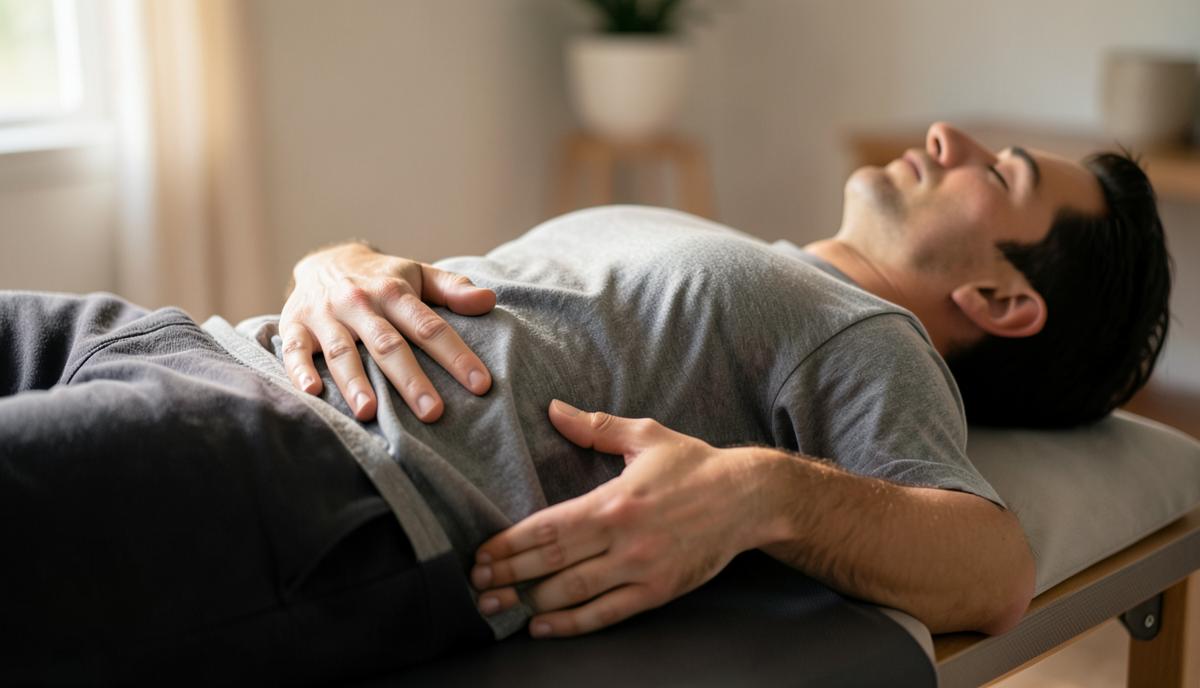
- Step 3: Take a slow diaphragmatic breath. Breathe gently through your nose and allow your lower ribs and abdomen to expand rather than lifting only the upper chest. Normal breathing is mechanically linked with pelvic-floor movement: studies suggest the pelvic floor generally descends and lengthens during inspiration and rises during expiration, and a preliminary ultrasound study found this pattern in most of ten healthy men studied.
- Step 4: Allow the pelvic floor to release during the inhale. As your abdomen expands, imagine the pelvic floor softening, widening and dropping slightly. Do not force the movement.
- Step 5: Exhale without squeezing. For relaxation practice, simply breathe out and remain as relaxed as possible. You do not need to add a deliberate Kegel at the end of every breath.
- Step 6: Repeat several slow breaths. Initially, prioritize awareness rather than repetitions — a few genuinely relaxed breaths are more useful than forcing dozens of "reverse Kegels."
There is no well-established evidence-based reverse-Kegel dosage for men.
Reverse Kegel and diaphragmatic breathing
The two concepts overlap but are not identical. Diaphragmatic breathing describes how you breathe; a reverse Kegel describes the intentional relaxation and lengthening of the pelvic floor. Breathing can be used as the cue that makes the pelvic-floor release easier.
Who might benefit from learning pelvic-floor relaxation?
It may be particularly relevant for men with documented or suspected:
- Pelvic-floor overactivity.
- Pelvic-floor myalgia.
- Difficulty relaxing during bowel movements.
- Chronic pelvic tension.
- Pelvic pain in which a therapist identifies muscle overactivity.
Pelvic-floor physical therapy programs for pain may include breathing, relaxation techniques, myofascial treatment and biofeedback. If several of the points above sound familiar, the guide to a tight pelvic floor in men covers the underlying condition in detail.
Can reverse Kegels help you last longer in bed?
This claim is much stronger online than the evidence. Learning not to involuntarily clench excessively during sex may be useful for some men, particularly if high pelvic-floor tension is part of the problem.
However, good clinical evidence has not established reverse Kegels as a stand-alone treatment for premature ejaculation. Premature ejaculation has multiple possible contributors and its own evidence-based management options — read the guide to lasting longer in bed rather than treating reverse Kegels as a guaranteed ejaculation-control technique.
Can reverse Kegels improve erections?
There is a plausible relationship between pelvic-floor relaxation, pain reduction and sexual function in men with an overactive or painful pelvic floor. That is different from claiming reverse Kegels directly produce harder erections in healthy men.
If erectile difficulties persist, read the guides to erectile dysfunction and how to get harder erections rather than assuming pelvic tension is the cause.
Common reverse Kegel mistakes
- Bearing down hard. The goal is relaxation, not maximal pressure.
- Holding your breath. Breath-holding can increase abdominal pressure and make relaxation harder.
- Trying to make a huge movement. Normal pelvic-floor movement during breathing is subtle.
- Using reverse Kegels to self-treat unexplained pain. Pelvic pain has many causes, and an exercise should not replace medical assessment.
- Assuming you need only relaxation forever. Some men eventually need both adequate relaxation and adequate strength.
When to stop and seek guidance
Stop the exercise and seek professional guidance if it:
- Increases pelvic pain.
- Causes urinary symptoms.
- Creates significant pressure.
- Causes rectal discomfort.
- Consistently worsens sexual symptoms.
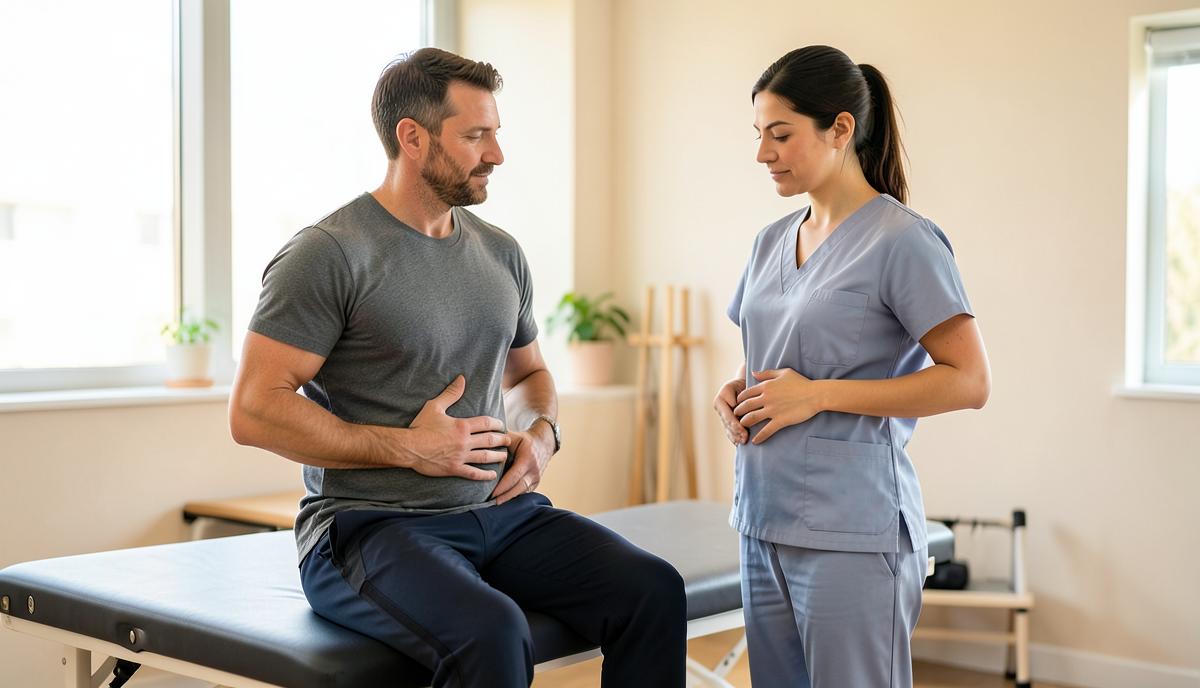
A trained pelvic-floor physical therapist can determine whether you are actually relaxing, pushing downward or compensating with other muscles.
Frequently asked questions
Is a reverse Kegel just relaxing?
Essentially, yes — it is deliberate awareness and relaxation/lengthening of the pelvic floor rather than a traditional contraction.
Should I push during a reverse Kegel?
No. Think gentle release rather than forceful bearing down. If you feel abdominal pressure or a bulge, you are straining, not relaxing.
Do reverse Kegels fix a tight pelvic floor?
They may be one relaxation tool, but treatment of hypertonicity may also require physical therapy, manual treatment, biofeedback or treatment of underlying contributors.
Can I combine regular and reverse Kegels?
Some people benefit from training both contraction and relaxation, but men with pain or significant overactivity should get individualized advice before emphasizing strengthening.
How many reverse Kegels should I do?
There is no validated universal dosage. Technique and symptom response matter more than chasing a repetition count.
Train the muscle behind control
The Free Kegel Trainer guides you through squeeze and release intervals, day by day.
Start Day 1Sources
- EAU Guidelines — Management of Chronic Pelvic Pain and Pelvic-Floor Overactivity
- Cleveland Clinic — Hypertonic Pelvic Floor
- Cleveland Clinic — Pelvic Health Rehabilitation
- PubMed — Male Pelvic Floor Muscle Length Changes With Breathing
- PubMed — Breathing, (S)Training and the Pelvic Floor
- NCBI Bookshelf — Pelvic Floor Training and Breathing
More Sexual Health articles
Medical disclaimer: This article is educational and not medical advice. Speak to a doctor or pelvic floor physiotherapist about persistent pelvic pain or urinary symptoms.