Kegel Exercises for Men: What They Are and How to Do Them
9 min read
Kegel exercises for men are exercises in which you deliberately contract and then fully relax your pelvic floor muscles — the muscles you would use to hold in wind or briefly stop the flow of urine. They are a form of pelvic floor muscle training (PFMT), and the goal is not bigger abs, glutes or thighs but better control of the muscles around the pelvic outlet. They can be genuinely useful, but they are not a universal fix for every pelvic or sexual problem: what matters is what your pelvic floor is actually doing.
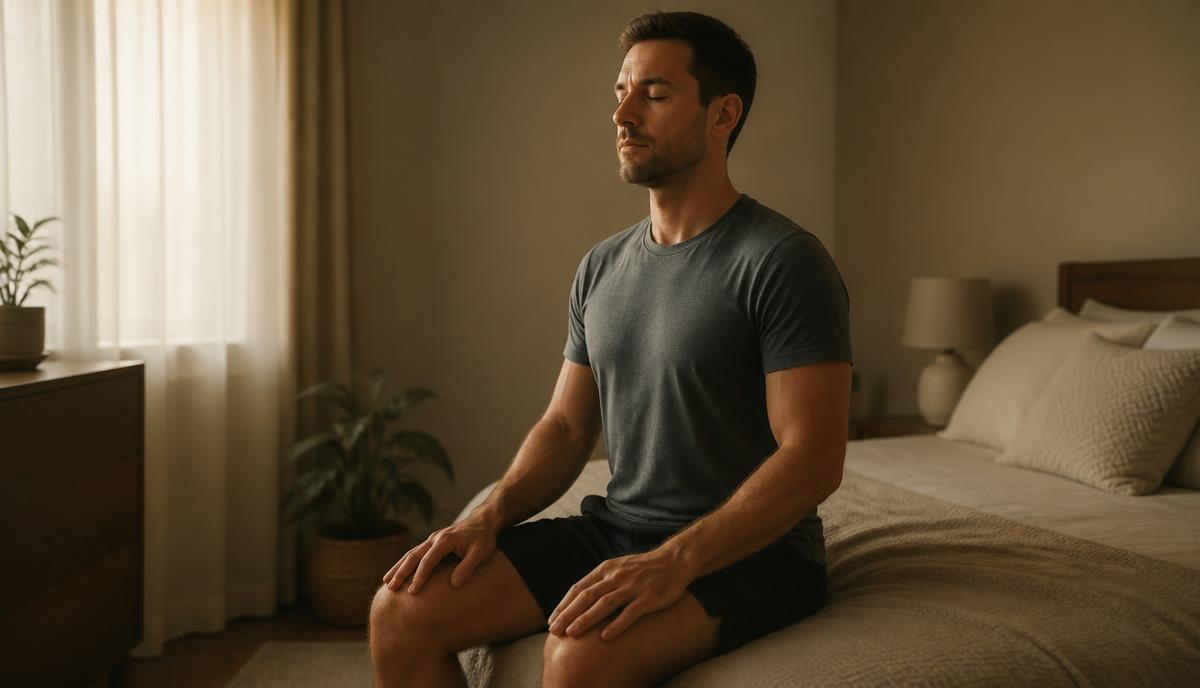
Quick answer: what are Kegel exercises for men?
- Kegel exercises for men are voluntary contractions of the pelvic floor muscles — a form of pelvic floor muscle training (PFMT).
- Their main purpose is to improve the pelvic floor's ability to contract, relax on demand and generate force.
- Evidence is strongest for urinary problems, particularly rehabilitation of continence after prostate surgery.
- Research suggests possible sexual-function benefits, but results and training protocols vary widely.
- Every repetition has two halves: the squeeze and a complete release. Constant clenching is not training.
- Kegels are not automatically appropriate for a tight or painful pelvic floor.
Want the squeeze-and-release rhythm timed for you, so you never cut the relaxation short? Start with the Free Kegel Trainer for Men.
What exactly is a Kegel?
A Kegel is a deliberate pelvic floor contraction. The National Institute of Diabetes and Digestive and Kidney Diseases describes Kegels as pelvic floor muscle training that helps with bladder and bowel control, and notes they can be performed by both men and women.
During a correct contraction you may notice:
- Tightening around the anus.
- A lifting sensation through the perineum.
- Subtle movement at the base of the penis.
- A feeling of pulling inward and upward.
It should not require forcefully squeezing your buttocks, thighs or abdominal muscles. Mayo Clinic describes the male pelvic floor as supporting the bladder and bowel and contributing to sexual function — for the full anatomy, read the guide to the male pelvic floor.
What are Kegel exercises supposed to train?
Like training any other muscle group, pelvic floor muscle training can address several aspects of muscular function:
- Strength — how much force the muscles can generate.
- Endurance — how long a contraction can be maintained.
- Timing — contracting at the moment pressure rises.
- Awareness — knowing what those muscles are doing at all.
- Coordination — working with the breath and deep abdominals instead of against them.
Research protocols, however, vary substantially. A systematic review of 108 studies of pelvic floor training for male urinary dysfunction found major differences in exercise volume, muscles targeted and how programs were delivered. That matters, because there is no scientifically established "perfect Kegel routine" that applies to every man.
How do you identify the pelvic floor muscles?
- Sit or lie down comfortably and unclench your jaw, shoulders and buttocks.
- Imagine you are stopping yourself from passing wind, then add the feeling of stopping urine mid-flow.
- Notice a gentle lift and inward draw between the base of the penis and the anus. That is the pelvic floor.
- Place a hand on your belly to check it stays soft, and keep breathing normally throughout.
- As a one-off test only, try stopping the flow once while urinating to confirm you have found the right muscles — do not make this a habit, as regularly interrupting urination is not good practice.
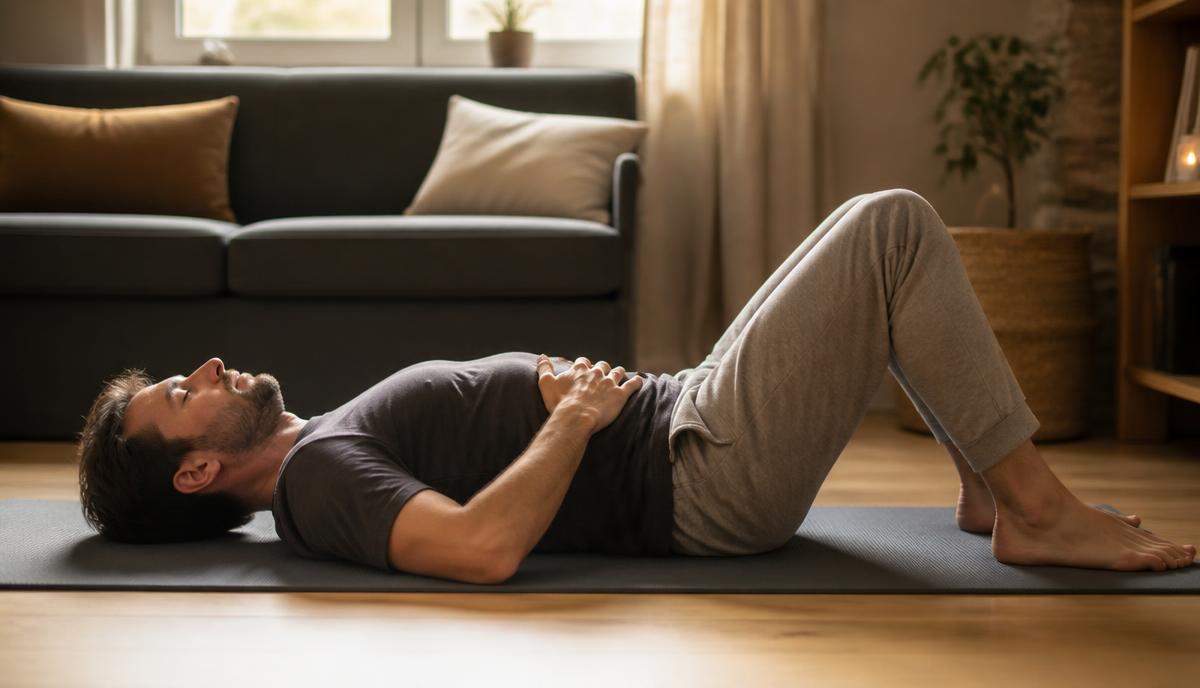
If you cannot tell whether you are contracting correctly, a pelvic floor physical therapist can assess your technique directly. Guessing for months is the most common reason men see no result.
What does a basic Kegel look like?
- Gently tighten and lift the pelvic floor — around half to two thirds of your maximum, not a full clamp.
- Keep breathing normally.
- Hold briefly, at a level you can genuinely control.
- Release the contraction completely.
- Let the pelvic floor stay relaxed before the next repetition.
The relaxation phase matters as much as the squeeze. Pelvic floor training should never turn into constant clenching. A practical starting point is a 5-second hold and a full 5-second release, 8–10 repetitions, once or twice a day — then adjust based on how the muscles respond.
The Free Kegel Trainer for Men on this site runs exactly that rhythm as a guided timer, so you are not counting in your head or cutting the release short.
What are the benefits of Kegel exercises for men?
Urinary continence after prostate surgery is one of the best-established clinical uses. Radical prostatectomy can disrupt the continence mechanism, so pelvic floor muscle training is commonly included in rehabilitation. A 2025 systematic review of randomised controlled trials found that structured, supervised pelvic floor training — after a correct contraction has been confirmed — can improve post-prostatectomy incontinence outcomes. Earlier reviews and meta-analyses point broadly the same way, though protocols and effect sizes differ.
Other forms of urinary leakage may also respond, because a weak pelvic floor can make it harder to control urine under pressure. Kegels are useful here when reduced strength or control is genuinely present. The pelvic floor also contributes to control of stool and gas, and NIDDK lists bowel-control problems among the reasons pelvic floor training is used.
For sexual function, the picture is more cautious. A systematic review of pelvic floor muscle training for erectile dysfunction and premature ejaculation found improvements across the included trials, but the studies were heterogeneous and generally of low-to-moderate quality, and no optimal protocol could be identified.
| Use case | What the evidence supports | How confident to be |
|---|---|---|
| After prostate surgery | Structured, supervised training improves urinary continence outcomes | Strongest evidence base |
| Urinary leakage and post-void dribble | Helpful when weakness or poor control is actually present | Reasonable, condition-dependent |
| Bowel and wind control | Included in standard pelvic floor training guidance | Moderate |
| Erections and ejaculation control | Trials show improvement, but quality is mixed and protocols vary | Promising, not guaranteed |
| Pelvic pain or an overactive pelvic floor | Strengthening may make symptoms worse; relaxation work comes first | Kegels often not the right starting point |
In short: pelvic floor training may help some sexual problems, but Kegels should not be sold as a guaranteed way to produce harder erections, delay ejaculation or intensify orgasms. For erection-specific advice, see the guide to getting harder erections and improving erection quality.
Common Kegel mistakes
Squeezing everything else. If your glutes, thighs and abdomen are doing most of the work, you are probably not targeting the pelvic floor at all.
Holding your breath. Breath-holding changes abdominal pressure and gets in the way of learning precise control.
Doing excessive repetitions. More is not automatically better — pelvic floor muscles fatigue, and research has not identified one universal high-volume protocol.
Never fully relaxing. A Kegel contains a contraction and a release. Staying clenched between repetitions defeats the point.
Assuming every symptom means weakness. Urgency, pelvic discomfort, difficulty urinating and sexual problems can all occur with an overactive pelvic floor — or with other medical conditions entirely.
How long do Kegels take to work?
Muscle adaptation takes time. Clinical patient programs generally ask for consistent training over weeks to months rather than promising quick change, and an NHS guide to the male pelvic floor notes improvements may take several months.
The realistic timeline depends on:
- Why you are training in the first place.
- Whether you identified the correct muscles.
- How severe the problem is.
- How consistently you actually train.
- Surgery or other underlying conditions.
- Whether weakness is genuinely present.
Consistency beats intensity: two short sessions most days will do more than one heroic session a week. Training with a timed program makes that far easier to keep up.
Kegels and reverse Kegels together
A Kegel is the squeeze; a reverse Kegel is the deliberate release and lengthening of the same muscles on a slow inhale. If your issue is weakness or leaking, weight your practice toward the squeeze. If your issue is tension, pelvic aching or finishing too quickly, weight it toward release.
The safest default for most men is to train both: every contraction followed by an equally long, fully felt relaxation.
When to get professional help
Consider seeing a physician or pelvic floor physical therapist if:
- Kegels cause pain.
- Symptoms get worse rather than better.
- You cannot tell whether you are contracting correctly.
- Urinary leakage persists.
- You have significant pelvic pain.
- You have difficulty urinating.
- You have problems emptying your bowels.
- You are rehabilitating after prostate surgery and want an individualised program.
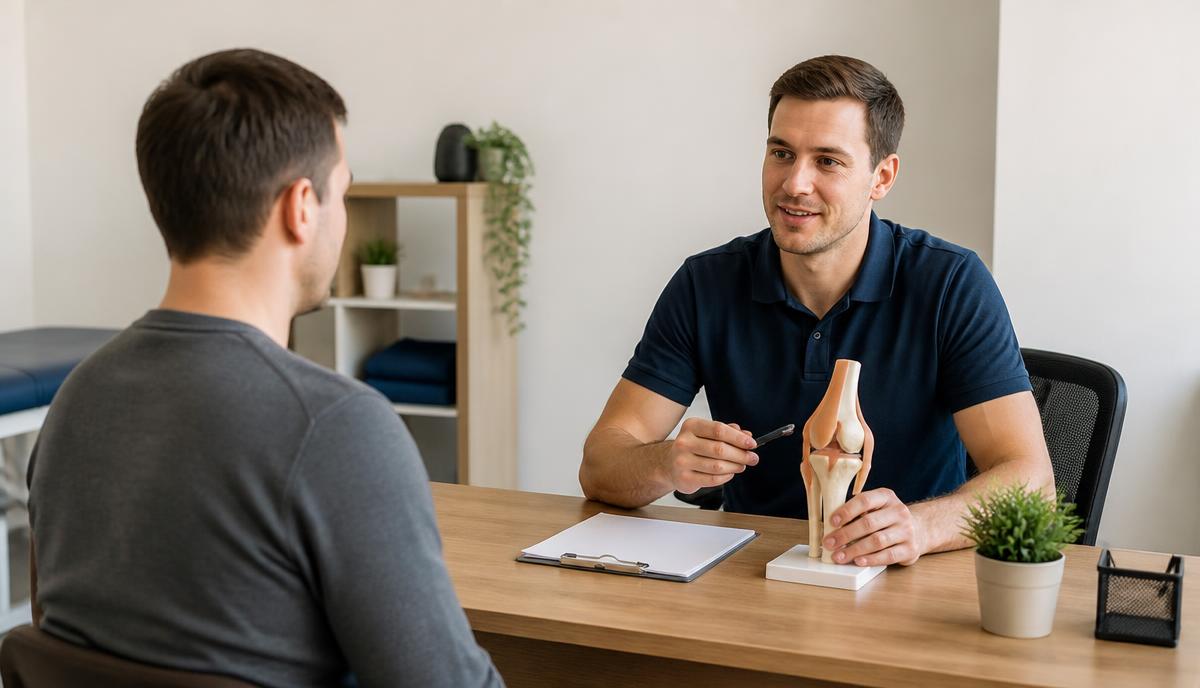
Cleveland Clinic specifically advises seeking professional guidance if Kegels cause pain or do not seem appropriate for your situation.
Frequently asked questions
Are Kegel exercises only for women?
No. Men have pelvic floor muscles too and can perform pelvic floor muscle training. It is used clinically for male urinary continence, particularly after prostate surgery.
How do you do Kegel exercises for men?
Gently lift the pelvic floor as if stopping wind or urine mid-flow, keep breathing normally, hold for around 5 seconds at a level you can control, then release completely for the same length of time. Around 8–10 repetitions once or twice a day is a sensible starting point.
Do Kegels strengthen the pelvic floor?
Yes. Voluntary pelvic floor contractions are the standard way to train pelvic floor strength and control, provided you are contracting the right muscles.
Can Kegels help erectile dysfunction?
Research suggests pelvic floor training may help some men with erectile dysfunction, but the evidence is not strong enough to treat it as a guaranteed stand-alone cure.
Can you do too many Kegels?
Yes. Excessive or inappropriate training can cause fatigue, and it may be unhelpful or counterproductive if your pelvic floor is already overactive.
Should Kegels hurt?
No. Stop if they cause pain and consider a professional assessment from a doctor or pelvic floor physical therapist.
How long does it take for Kegels to work?
Expect weeks to months rather than days. NHS guidance for the male pelvic floor notes that improvements may take several months of consistent training.
Train the muscle behind control
The Free Kegel Trainer guides you through squeeze and release intervals, day by day.
Start Day 1Sources
- NIDDK — Kegel Exercises
- Mayo Clinic — Kegel Exercises for Men
- Cleveland Clinic — Kegel Exercises for Men
- PubMed — Design of programs to train pelvic floor muscles in men with urinary dysfunction (systematic review)
- PubMed — Structured and supervised pelvic floor muscle training after prostatectomy (2025 systematic review)
- PubMed — Pelvic floor muscle training for erectile dysfunction and premature ejaculation
More Sexual Health articles
Medical disclaimer: This article is educational and not medical advice. Speak to a doctor or pelvic floor physiotherapist about persistent pelvic pain or urinary symptoms.