Penis Blood Flow: How Erections Actually Work
9 min read
Penis blood flow is central to how erections work. A flaccid penis contains relatively little blood inside its erectile chambers. During sexual arousal the nervous system triggers smooth-muscle relaxation, penile arteries dilate and blood rapidly enters the corpora cavernosa. At the same time, the expanding erectile tissue compresses the veins that normally drain the penis. That combination turns a low-flow organ into a pressurised erectile structure. Because erections depend so heavily on blood vessels, conditions that damage arteries anywhere in the body can also affect erection quality. This article focuses on the physiology of penile circulation and what vascular health really means for erections.

Quick answer
- An erection is fundamentally a blood-flow event, but it still needs healthy nerves and genuine sexual arousal to start.
- Nitric-oxide signalling relaxes penile smooth muscle, arteries dilate and blood fills the corpora cavernosa.
- Expanding erectile tissue compresses the draining veins, temporarily trapping blood and creating rigidity.
- Atherosclerosis, diabetes, hypertension, abnormal cholesterol and smoking can all impair that vascular response.
- Improving cardiovascular health supports erectile function, but persistent problems deserve medical evaluation, not unproven “blood-flow boosters”.
- Blood flow is only one part of the system — nerves, hormones, arousal and psychology matter too.
An erection is a blood-flow event that depends on healthy nerves and real arousal: arteries open, the erectile chambers fill, and the draining veins are squeezed shut. Free Kegel Trainer for Men.
The blood vessels of the penis
The penis contains three main cylindrical erectile structures: two corpora cavernosa and one corpus spongiosum. The paired corpora cavernosa are primarily responsible for erection rigidity.
Inside them are expandable vascular spaces called sinusoids, surrounded by smooth muscle. Arterial blood reaches the penis through branches ultimately originating from the internal iliac circulation.
At rest, smooth-muscle tone limits how much blood can enter these erectile spaces. During arousal, that changes dramatically.
How blood flow creates an erection
Step 1 — Sexual arousal activates nerve pathways. An erection can begin from touch, visual stimulation, fantasy or other sexual signals. These involve the brain, spinal cord and pelvic nerves.
Step 2 — Nitric-oxide signalling promotes relaxation. Erectile nerves release signalling molecules including nitric oxide, which activates biochemical pathways that reduce smooth-muscle tone in penile arteries and erectile tissue. As the muscle relaxes, resistance to incoming blood falls.
Step 3 — Arterial inflow rises. Relaxed arteries allow substantially more blood into the penis, and the sinusoids in the corpora cavernosa expand as they fill.
Step 4 — The corpora cavernosa expand. As the erectile spaces enlarge, internal pressure rises and the penis becomes larger, straighter and firmer.
Step 5 — Venous outflow is restricted. This step is essential. If blood entered and immediately drained at the same rate, sufficient rigidity would never develop. As the corpora cavernosa expand against the relatively firm tunica albuginea, the veins draining the erectile tissue are compressed — often called the veno-occlusive mechanism.
Step 6 — Blood is temporarily trapped. Arterial inflow plus restricted venous outflow raises pressure inside the erectile chambers, producing a firm erection.
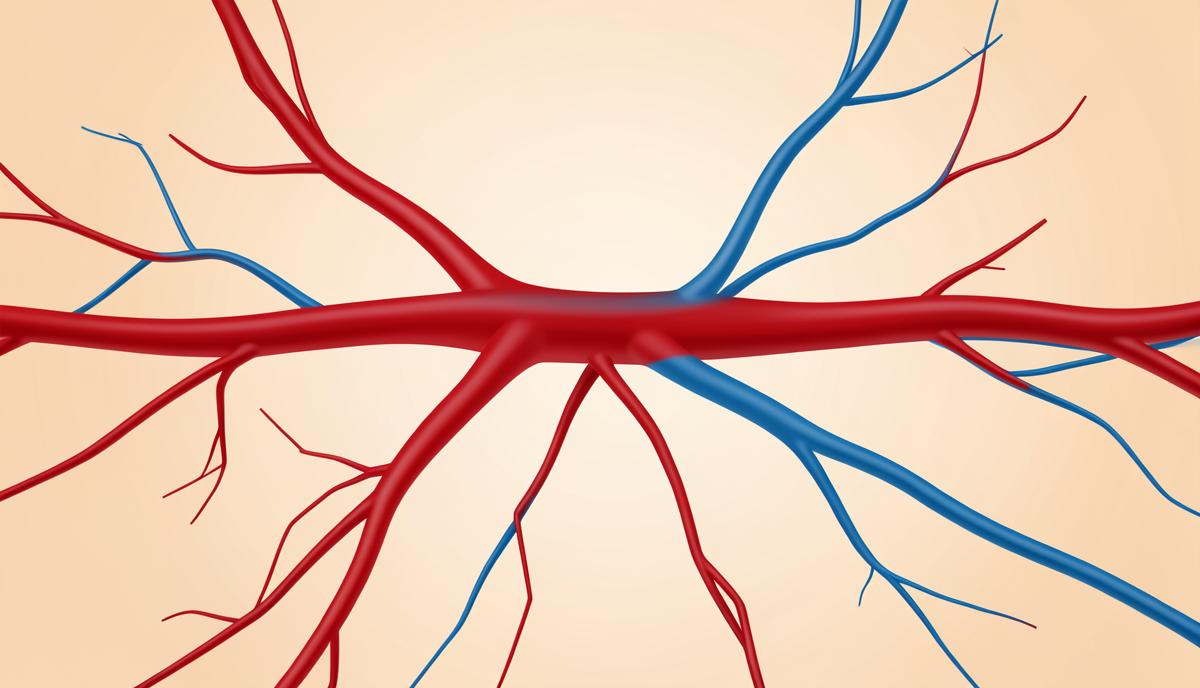
Blood flow in vs blood flow out
An easy way to understand erection problems is to separate the two vascular jobs the penis has to do.
| Function | What needs to happen |
|---|---|
| Blood entering | Penile arteries must dilate enough |
| Blood leaving | Venous drainage must become sufficiently restricted |
Problems on either side can contribute to erectile dysfunction. But erections also require intact nerve signalling and adequate arousal, so blood flow is only one part of the complete system.
What is nitric oxide?
Nitric oxide (NO) is an important signalling molecule in erection physiology. It helps activate the pathways that relax smooth muscle inside penile erectile tissue.
PDE5 inhibitors such as sildenafil and tadalafil do not directly manufacture an erection. They inhibit the breakdown of a signalling molecule called cGMP, strengthening the nitric-oxide-mediated erectile pathway during sexual stimulation.
That is why ED medication generally works far better in the presence of genuine sexual arousal.
Why cardiovascular health affects erections
The penis does not have an isolated circulatory system. The same processes that damage arteries elsewhere in the body can affect penile circulation.
Conditions that matter most
- Atherosclerosis
- Hypertension
- Diabetes
- Abnormal cholesterol
- Smoking-related vascular injury
- Obesity and metabolic syndrome
This shared vascular biology explains the strong relationship between erectile dysfunction and cardiovascular disease.
Penis blood flow and heart disease
ED can sometimes appear before overt cardiovascular disease. Mayo Clinic explains that endothelial dysfunction and atherosclerosis reduce blood flow to both the penis and the heart, and notes that erectile symptoms may precede obvious heart symptoms.
The Princeton IV consensus similarly identifies ED as a cardiovascular risk marker and recommends cardiovascular risk assessment when vasculogenic ED is suspected.
This does not mean “weak erection = blocked heart arteries”. It means persistent, unexplained vascular erectile problems are another good reason to have your cardiovascular risk assessed.
Diabetes and penile blood flow
Diabetes can impair erections in two important ways: by damaging blood vessels and by damaging nerves.
Long-term elevated blood sugar can therefore reduce both the signal that initiates an erection and the vascular response required to create it. This is one reason erectile dysfunction is especially relevant in men with diabetes.
Smoking and penile circulation
Smoking is associated with both cardiovascular disease and erectile dysfunction. It can damage endothelial function and contribute to vascular disease, reducing the ability of blood vessels to respond normally.
For a system as dependent on rapid dilation as penile erection, that matters a great deal.
High blood pressure and erections
Hypertension can damage arterial health over time and is a recognised ED risk factor. Some blood-pressure medications can also affect sexual function in selected patients.
The answer is not to leave hypertension untreated. Both the blood pressure and the sexual side effects should be managed with a healthcare professional.
How to support better blood flow and stronger erections
Erection quality depends heavily on healthy blood flow. During arousal the arteries supplying the penis widen, allowing the erectile tissue to fill while the veins are compressed to keep that blood inside.
The most effective long-term ways to support this are the same habits that improve cardiovascular health: regular aerobic exercise, not smoking, keeping blood pressure, cholesterol and blood sugar in a healthy range, limiting heavy alcohol use and eating a heart-healthy diet. Stress, performance anxiety, certain medications and some medical conditions can also reduce erection quality even when blood flow is not the main problem.

Persistent weaker erections should not be ignored — erectile problems can be an early sign of cardiovascular or metabolic disease. For practical ways to improve firmness, see our guide on how to get harder erections and improve erection quality.
What is a “venous leak”?
The term usually refers to failure of the normal corporal veno-occlusive mechanism. Normally, expanding erectile tissue compresses venous drainage and helps trap blood inside the corpora cavernosa. If that mechanism does not work adequately, maintaining full rigidity becomes difficult.
However, repeatedly losing an erection does not automatically mean venous leak. Many other causes are far more common — see our guide on how to maintain an erection for the practical problem of erections fading during sex.
How doctors measure penile blood flow
Penile Doppler ultrasound. A clinician can use ultrasound to assess blood moving through penile vessels. NIDDK lists ultrasound among the tests that may be used to show penile blood flow during an ED evaluation. In specialised testing, medication may be used to trigger an erection while arterial inflow and venous behaviour are measured — useful when vascular ED is suspected.
Nocturnal erection testing. Sleep-related erections can also provide information about erectile capacity, although this measures erectile function rather than directly measuring arterial blood flow. Our article on morning erections covers what they do and do not tell you.
Blood flow is not the only cause of weak erections
This matters because “increase blood flow” has become a marketing phrase. Even perfectly healthy arteries cannot guarantee an erection if there is a significant problem involving:
- Nerves
- Sexual arousal
- Psychological state
- Erectile tissue itself
- Hormonal health
ED is not simply a plumbing problem. See our erectile dysfunction guide for the complete cause structure.
Beware of “blood flow” supplements
Products marketed for male enhancement, nitric oxide, sexual stamina or stronger erections often imply that simply increasing circulation will fix ED.
Evidence for many supplements is weak, and product quality is a significant concern. The FDA regularly reports supposedly natural sexual-enhancement products that contain undeclared prescription drug ingredients.
Never assume an erection supplement is safe just because it is available without a prescription.
When to see a healthcare professional
Medical evaluation is appropriate if:
- Erections have become persistently weaker
- You repeatedly cannot maintain an erection
- Problems are progressively worsening
- You have diabetes
- You smoke
- You have hypertension or high cholesterol
- You have known cardiovascular disease
- Symptoms occur during masturbation as well as sex
- You are considering prescription ED medication
Persistent erectile problems can provide genuinely useful information about your overall vascular health.
Frequently asked questions
How does blood get into the penis?
During arousal, nerve signalling relaxes smooth muscle in the penile arteries and erectile tissue, allowing much more arterial blood to enter the corpora cavernosa.
What keeps blood in the penis during an erection?
Expansion of the corpora cavernosa compresses veins against the tunica albuginea, reducing venous outflow and helping maintain rigidity.
Does poor circulation cause erectile dysfunction?
It can. Vascular disease is a major category of ED, although neurological, hormonal, psychological and other causes also exist.
Can exercise increase blood flow to the penis?
Regular aerobic exercise improves cardiovascular health, and randomised trials show it can improve erectile function in men with ED. This is a long-term health effect rather than an instant erection technique.
How do you test blood flow to the penis?
Penile Doppler ultrasound can be used in selected patients to evaluate arterial inflow and vascular function.
Can clogged arteries cause weak erections?
Atherosclerosis can impair blood flow and contribute to ED. Persistent vascular erectile problems may also warrant broader cardiovascular risk assessment.
Train the muscle behind control
The Free Kegel Trainer guides you through squeeze and release intervals, day by day.
Start Day 1Sources
- NCBI Bookshelf — Physiology of erection
- PubMed — Normal erectile function
- PubMed — The physiology of penile erection
- EAU — Management of erectile dysfunction
- Mayo Clinic — Erectile dysfunction and heart disease
- Mayo Clinic — Erectile dysfunction and diabetes
- Princeton IV Consensus Guidelines
- NIDDK — Diagnosis of erectile dysfunction
- NIDDK — Treatment for erectile dysfunction
- PubMed — Effect of aerobic exercise on erectile function
- FDA — Sexual enhancement and energy product notifications
More Sexual Health articles
Medical disclaimer: This article is educational and not medical advice. Speak to a doctor or pelvic floor physiotherapist about persistent pelvic pain or urinary symptoms.